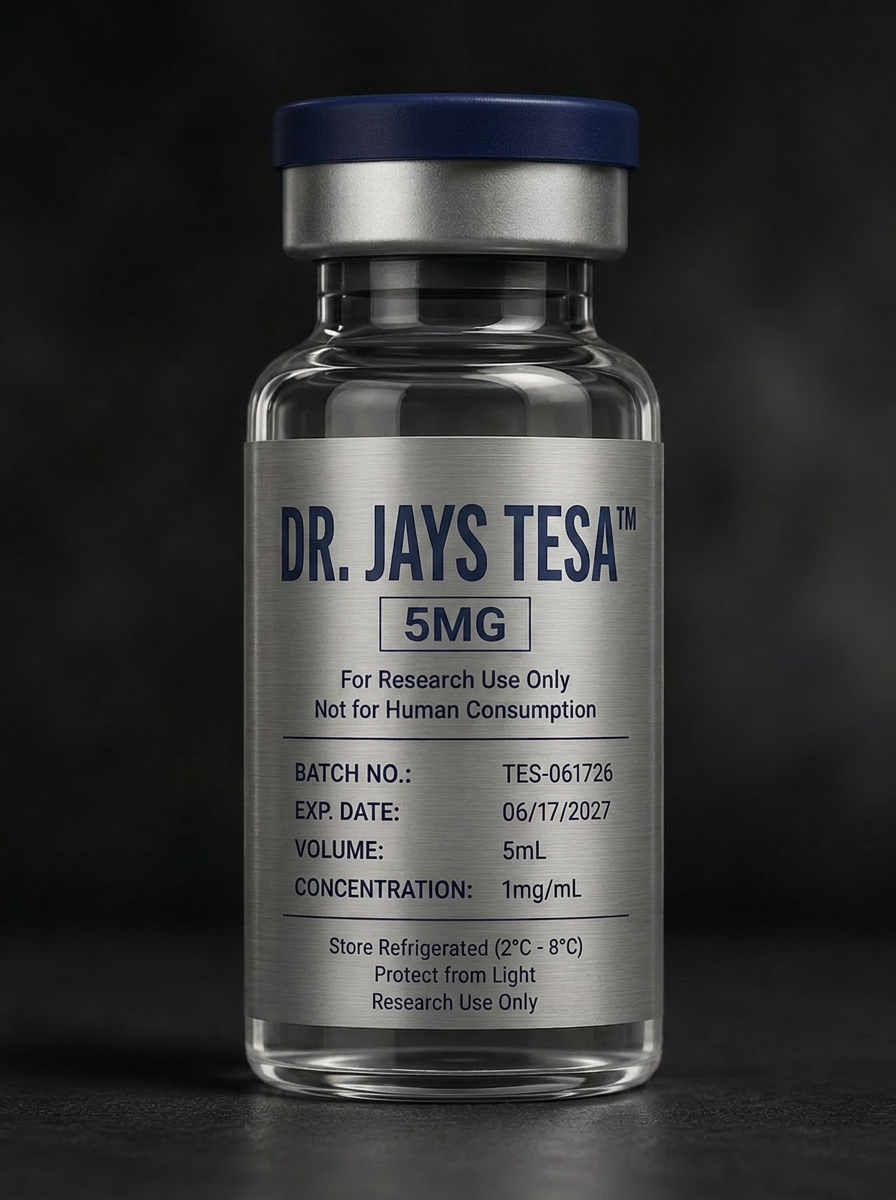
Tesamorelin is studied in laboratory contexts that span GHRH receptor pharmacology, pituitary growth-hormone-axis research, comparative pharmacology of GHRH analogs and GH secretagogues, and broader metabolic-research areas connected to growth-hormone-axis signaling.
In GHRH receptor pharmacology, tesamorelin serves as a reference stabilized full-length GHRH analog for studies on receptor binding and signaling at the GHRH receptor, on the downstream Gs / cyclic AMP / PKA / CREB cascade activated by GHRH-receptor engagement, on the comparative pharmacology of full-length GHRH(1-44) analogs versus shorter GHRH(1-29) analogs, and on the structure-activity relationships within the broader GHRH-analog research lineage.
In pituitary growth-hormone-axis research, tesamorelin appears in studies on the pulsatile growth hormone secretion produced by GHRH-receptor stimulation, on the integration of GHRH-receptor signaling with the somatostatin counter-regulatory signaling that contributes to the pulsatile growth-hormone-secretion pattern, on the differences and similarities between GHRH-mediated growth hormone secretion and ghrelin-receptor-mediated growth hormone secretion (the GH-secretagogue pharmacology), and on the integrated pharmacology of the growth-hormone-axis at the pituitary, hepatic, and peripheral tissue levels.
In comparative GHRH-analog and GH-secretagogue research, tesamorelin is used as a reference compound alongside sermorelin (a shorter GHRH(1-29) analog with simpler chemistry), the CJC-1295 derivatives (GHRH(1-29) analogs with stabilizing modifications including the albumin-binding DAC linker variant), and the GH-secretagogue research peptides ipamorelin and hexarelin (which act at the GHSR / ghrelin receptor rather than at the GHRH receptor). The comparative pharmacology characterizes the differences between GHRH-receptor engagement and GHSR-receptor engagement in producing growth hormone secretion, and the differences between full-length GHRH(1-44) and GHRH(1-29) scaffolds.
In broader metabolic-research areas, tesamorelin appears in studies on the integration of growth-hormone-axis signaling with metabolic regulation, particularly on the effects of stimulated growth hormone secretion on body composition, on lipid metabolism, and on related metabolic endpoints. The clinical-research literature on tesamorelin in the Egrifta approval context addresses specific metabolic-research questions that are part of this broader integration of growth-hormone-axis and metabolic pharmacology.
Across all of these contexts, the research applications in the research-peptide supply context are laboratory and analytical in nature. The compound's status as an approved pharmaceutical under the Egrifta brand for a specific clinical indication is a separate channel; research-peptide use is intended for laboratory and analytical work distinct from clinical use of the approved product.